CRM for a web studio
A CRM for a web studio: clients, projects, tasks, finance and site monitoring with Telegram alerts.

About the project
A CRM for a web studio: clients, projects, tasks, money, servers and sites in one place. It watches client sites around the clock and writes to Telegram when something goes down, is about to expire or becomes unsafe.
The task
- Clients, tasks, credentials and money were scattered across different places.
- There was no single screen showing the state of every server and client site.
- The team needed to learn about a site outage, a stale backup or an expiring certificate straight away, not from the client.
- The CRM had to work from anywhere and not depend on third-party paid services.
What the system includes
- Three types of projects: client work, in-house products and infrastructure. A drag-and-drop task board linked to the calendar.
- A "Servers and sites" section: CPU, memory and disk load, a screenshot of the site's first screen, response time, uptime and the SSL certificate expiry date.
- Telegram alerts: a site is down, a disk is over 90% full, a database backup is older than 36 hours, a certificate is expiring, or a WordPress plugin has a new vulnerability.
- A daily SEO and security check of the sites: whether the site is open to Google, whether it has a sitemap and meta tags, and whether any service files are left publicly accessible.
- Finance: income in five currencies converted at the National Bank of Ukraine rate, monthly recurring income and a cash flow chart.
- Meeting reminders in Telegram 10 minutes before the start.
- A connection to an AI assistant through MCP: the assistant reads and changes projects and tasks in the live database.
How the system is built
The server is written in Node.js with no third-party libraries, which means fewer updates and fewer security risks. Login takes a password and a one-time code from a phone. Server credentials are stored apart from the main database and are not included in backups.
Server state is collected by a small Python script that can only read metrics and changes nothing. Integrations run on the CRM server on a schedule, so service keys never reach the browser. Site screenshots are taken by Chrome running in the background, and each frame weighs about 40 KB.
Problems and solutions
- A false "CPU 100%" alarm. The script measured load for half a second and caught a random spike. It now uses an average over about five minutes.
- Time in reminders. The server runs on UTC, so a meeting at 13:00 Kyiv time arrived as "11:00". The CRM service now runs in the team's time zone.
- False redirects to the login page. The browser treated a "service not connected" answer as an expired session. The server now marks a real refusal separately, and a disabled integration no longer gets in the way.
- A finding on a live site. The new security check found publicly accessible service files on one of the sites. We closed access to them and checked the site after the change.
Result
- The CRM has been running on a dedicated server since November 2026.
- Sites and servers are checked every five minutes, SEO and security once a day.
- Alerts, reminders, expected income and currency conversion work without anyone's involvement.
- The code is covered by 60 automated tests.
Technology
Node.js, JavaScript, Python, HTML and CSS, the MCP protocol, headless Chrome and the APIs of Telegram, Google and hosting providers.
Screens of the system
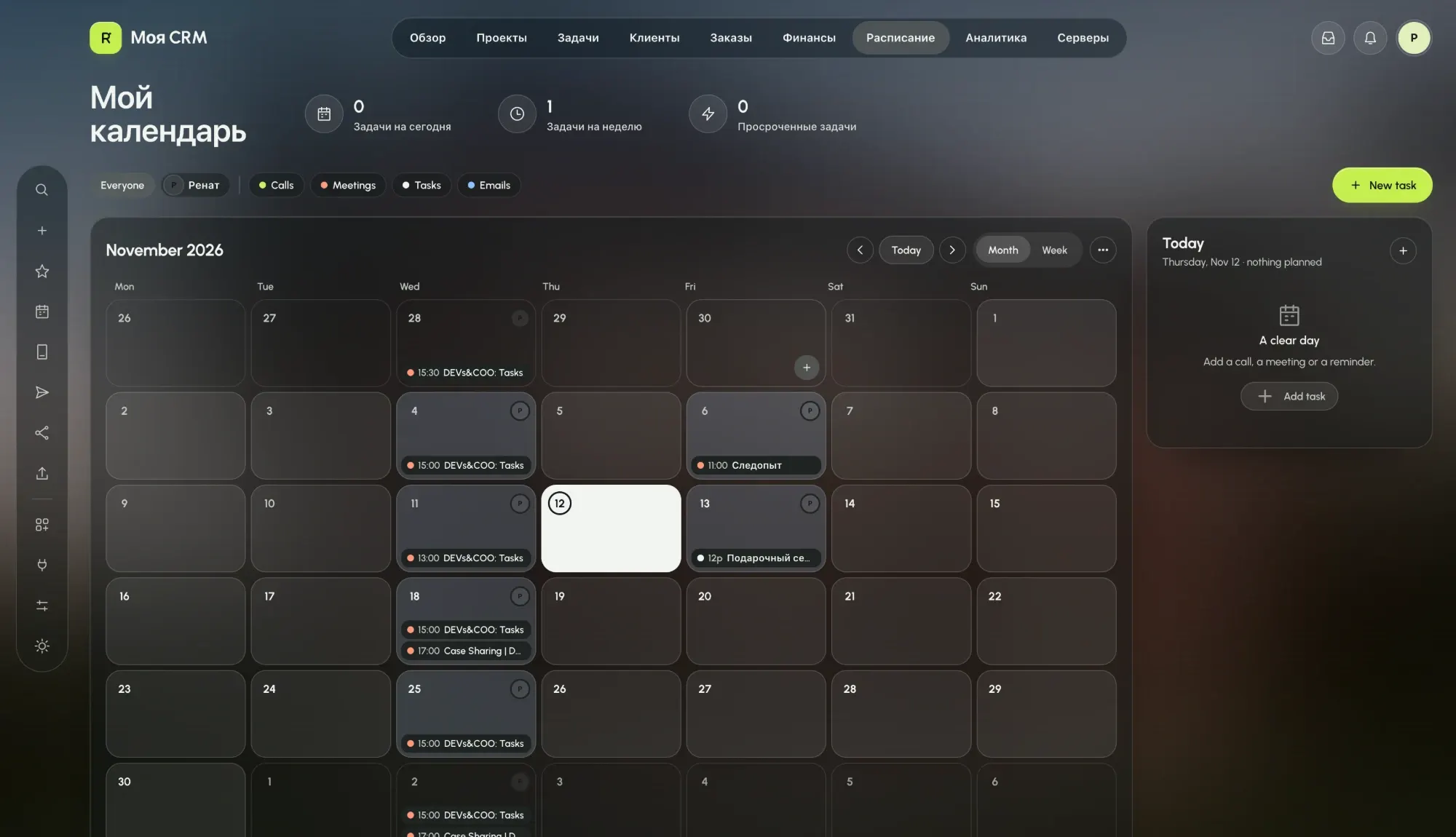
Calendar of meetings and tasks 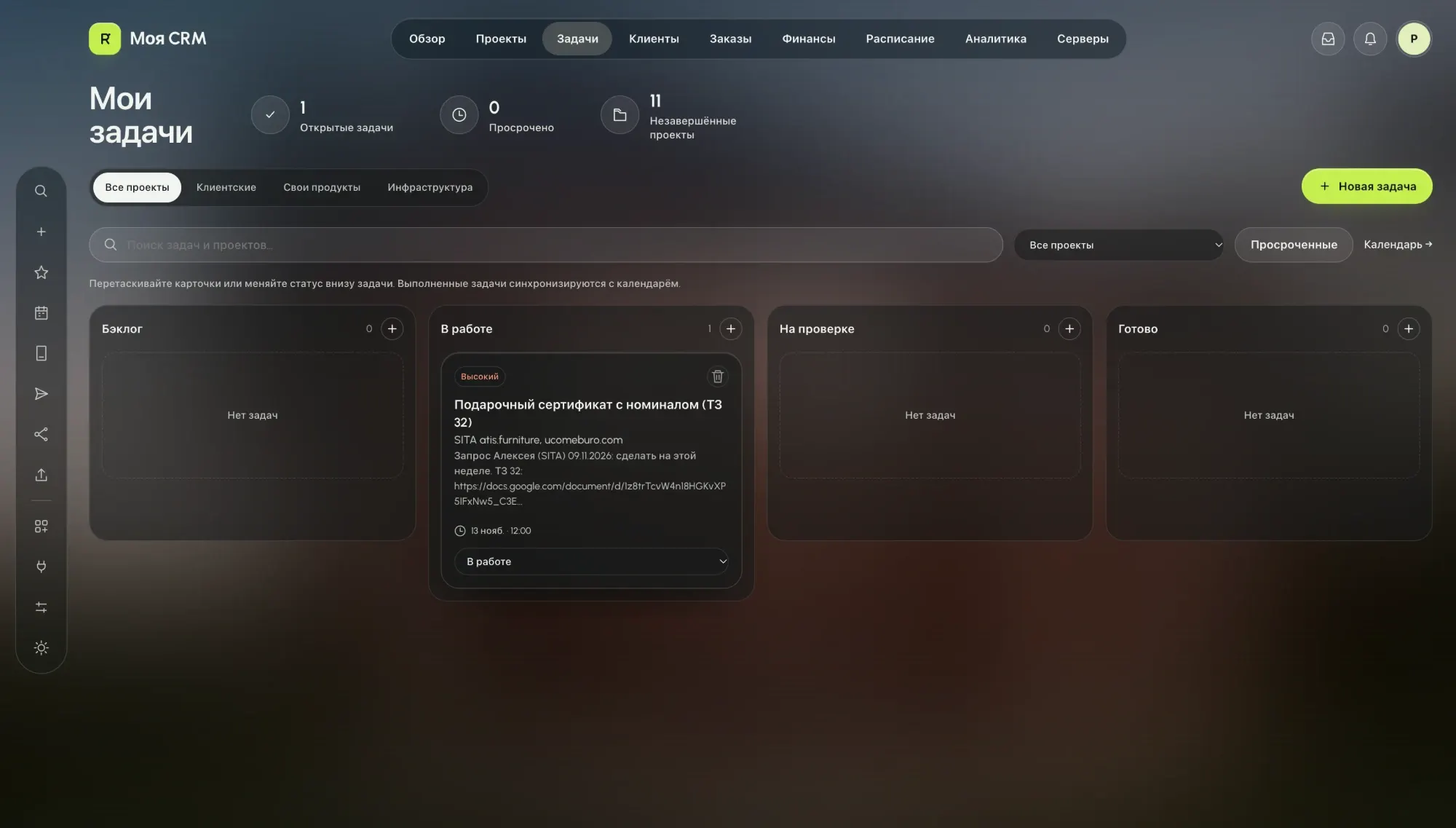
Task board
Work
More projects

Zinovieva, 2026
SPA for a UGC creator
A modern website for a UGC creator, with speed optimisation and SEO work.
zinovieva.space